🎵 Audio guide
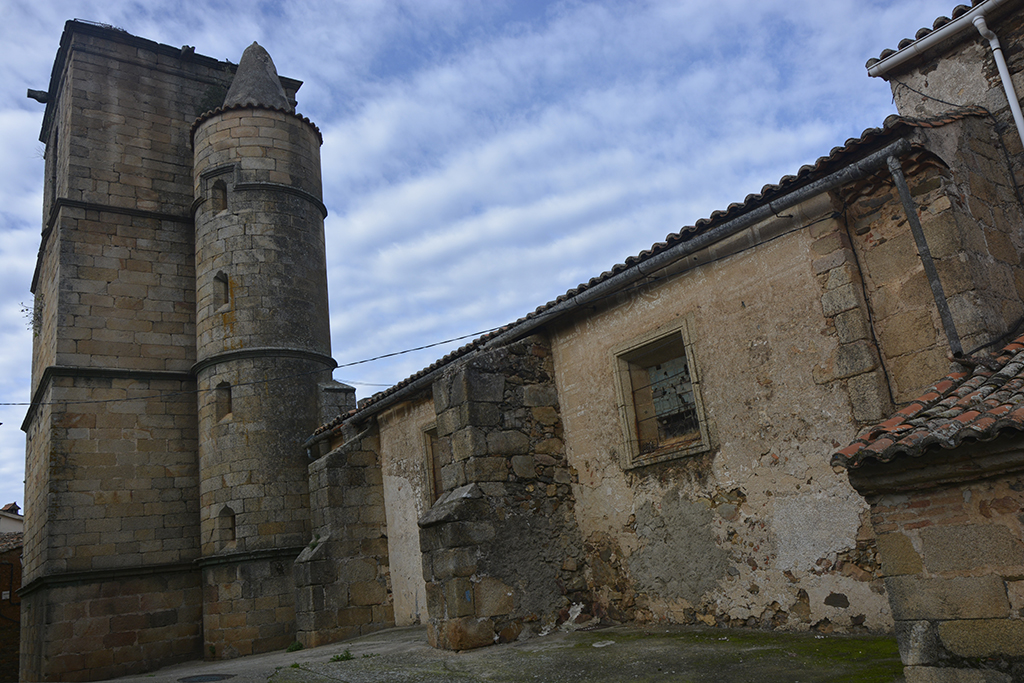
La Iglesia de Nuestra Señora de la Asunción (Church of Our Lady of the Assumption) is a generously proportioned construction which was extended in the 16th century. The location and the bell tower with its adjacent cylindrical tower give it a unique appeal.
The exterior of the nave is rectangular, constructed in stone masonry with ashlar corners, buttresses and various interesting details. The chancel is narrower and taller. The bell tower is on the epistle (south) side at the west end of the church. It is a hollow structure, constructed in its entirety in granite ashlar with an adjoining round tower, which houses the spiral staircase which provides access to the belfry. In the 16th century, work was done on the church, raising the height of the nave, the chancel and the magnificent bell tower.
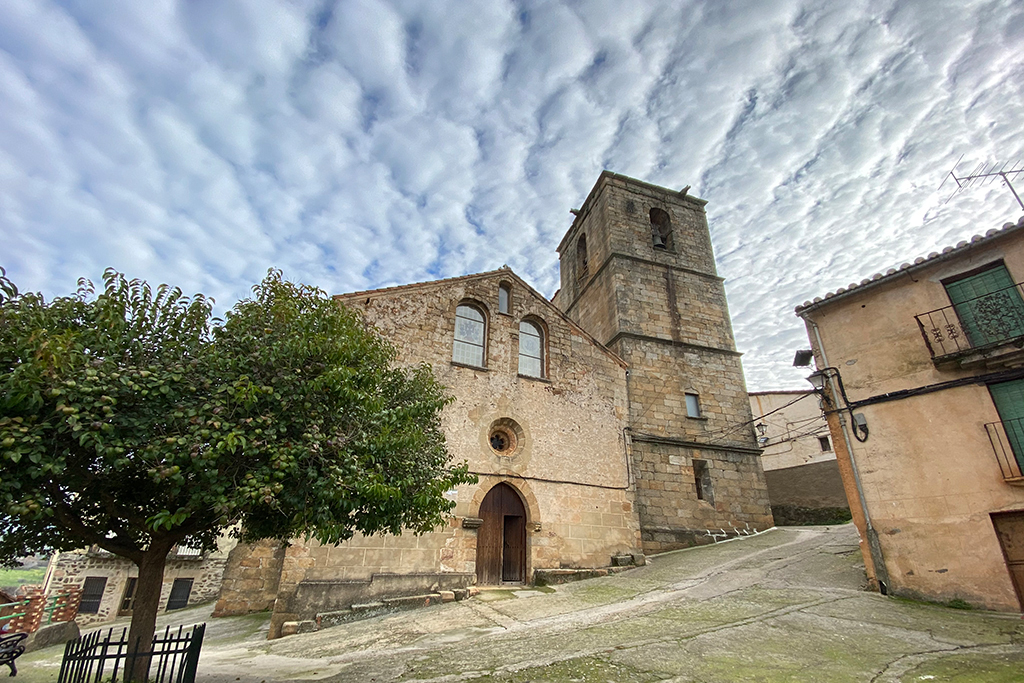
The church has two entrances. The main, west entrance has a gothic pointed arch, above which there is a beautiful, multifoil rose window and two diminished round arched windows. On the gospel (north) side, nestled between two large buttresses and protected by a wooden pentice is the side entrance. A beautiful flight of stone stairs leads to a rounded arch framed by an alfiz - Moorish decorative moulding. Also of note are the various side windows, framed by beautiful sgraffito - decorative plasterwork, from 1793.
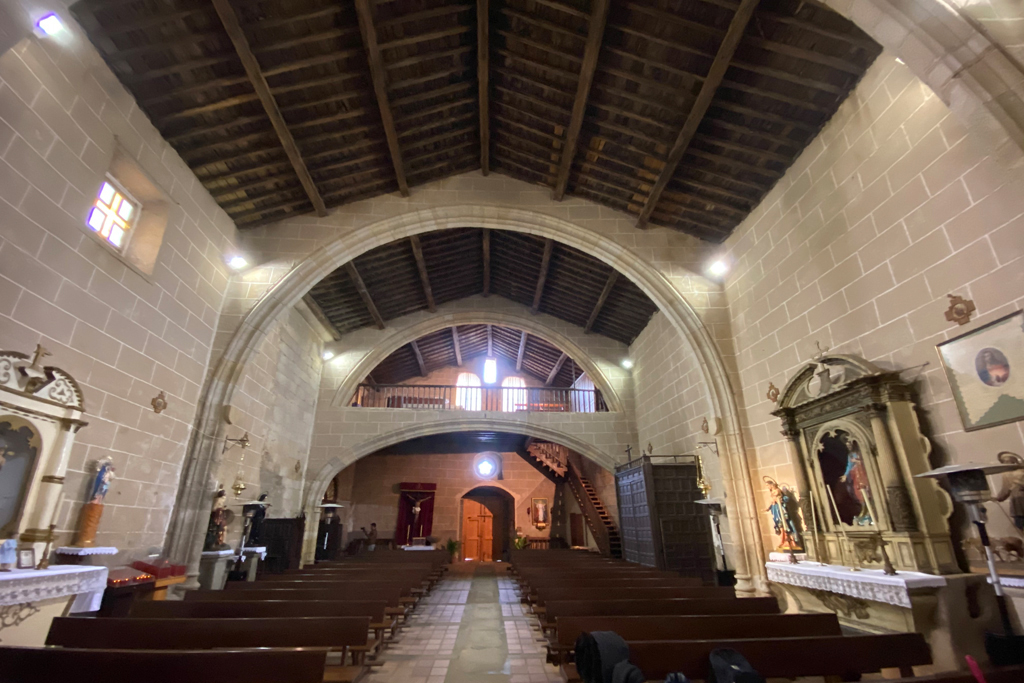
The interior of the church is rendered in a blockwork design and is fairly spacious.
The wooden ceiling of the rectangular nave is divided into four parts by beautiful rounded diaphragm arches which rest on pillars. The choir loft, whose wooden structure rests on a segmental arch which forms part of the diaphragm arch, is located at the back of the church. Also in this area is the baptismal chapel, at the bottom of the hollow bell tower, roofed by a groin vault. The 16th century pulpit is one of the church’s interesting features. Made of beautifully decorated granite, it is covered by an 18th century baroque sounding board. There is a series of gothic style, sepulchral tombs on the floor which date from the 16th century.
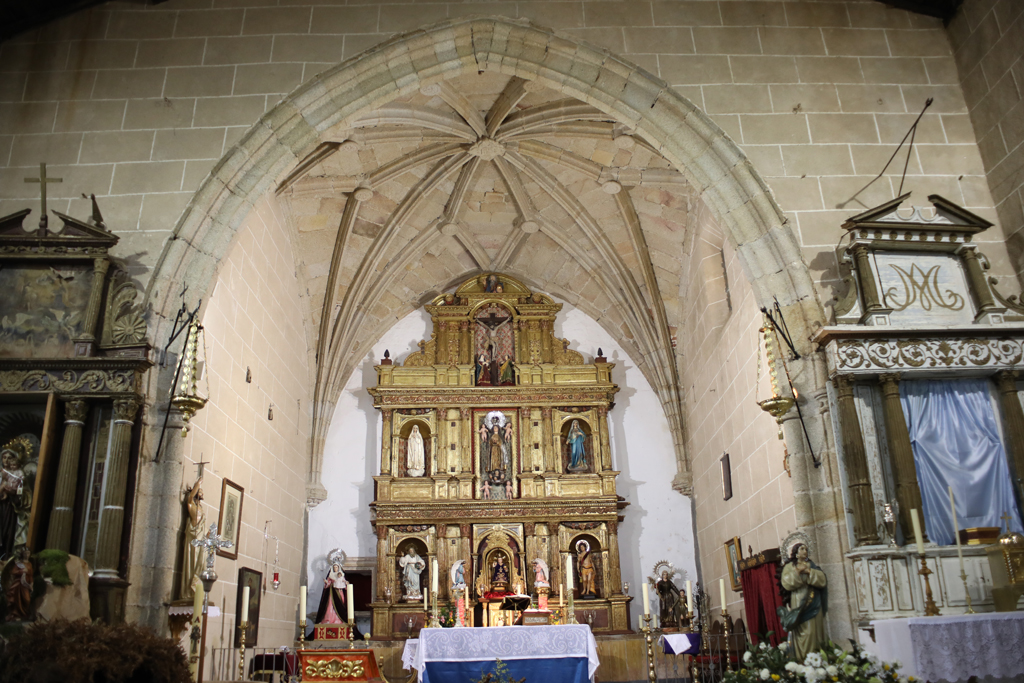
The chancel, which is narrower and taller, is linked to the nave by a slightly pointed arch and covered by star-shaped groined vaulting, constructed wholly of granite. The sacristy, covered by a barrel vault, houses an attractive granite washbasin. Also to be found in the sacristy is the beautiful 16th century baptismal font, made of marvellously decorated granite.
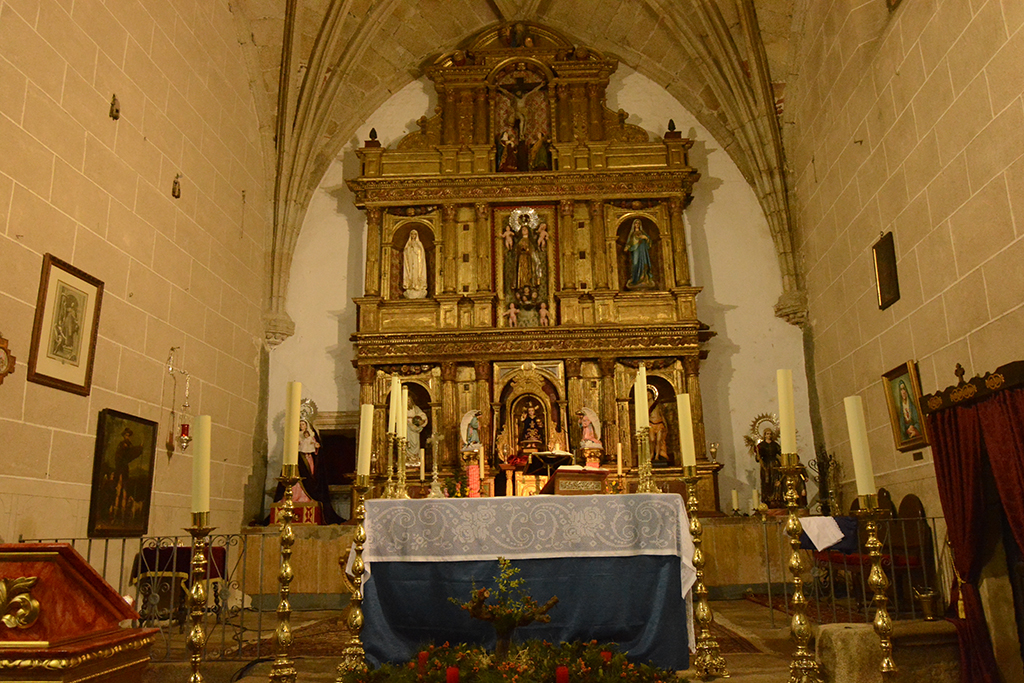
Villanueva’s church houses some interesting examples of religious imagery. There are five gilded and coloured wooden altarpieces. The main altarpiece, from the 17th century is presided over by the Virgin of the Assumption. Beside this there are images of the martyrs Cyricus and Julitta, the patron saints of the village. At the opening of the main chapel there are two classical style altarpieces from the 18th century. The one on the gospel side is dedicated to the Virgin of Carmen while the one on the Epistle side honours the Immaculate Conception. Two more altarpieces sit opposite each other decorating the side walls of the nave.
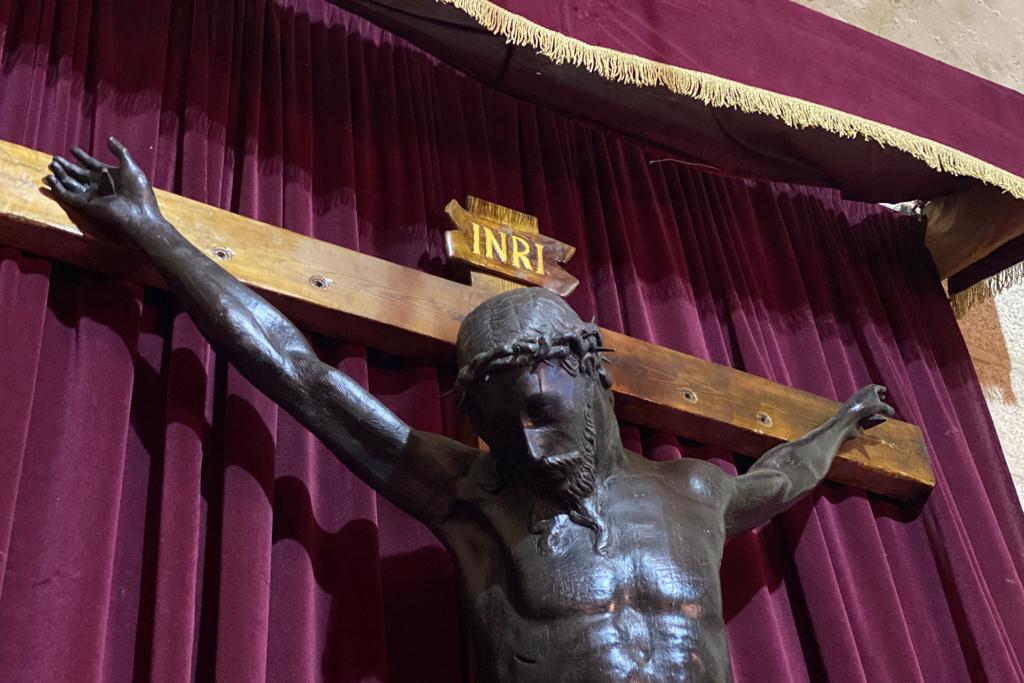
There are two notable images in the baptismal chapel. The image of Cristo de la Salud from the 17th century who was worshipped in his former chapel. His form is extensively blackened by the smoke from a forest fire which highlights his baroque features. There is also an image of an expressive Cristo Yacente, which is also baroque.